#doDifferent by Signing for Your Next Coffee
How I Love Coffee Group is quietly rewriting what it means to make a living - one cup at a time.
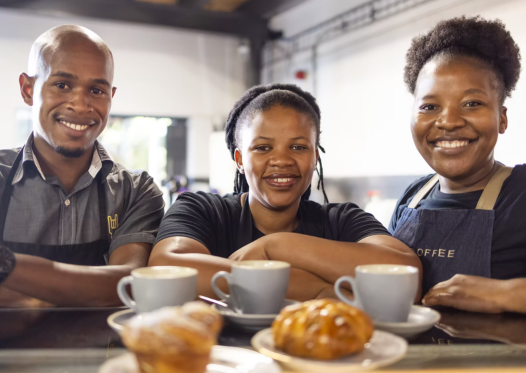
Picture this: you walk into a sleek corporate café somewhere in Cape Town or Johannesburg. The coffee smells extraordinary. The space hums with the quiet energy of people at work. You approach the counter, and the barista behind the espresso machine greets you with a warm smile and a raised hand - not a wave, but a sign. Welcome to I Love Coffee, where the first language really is coffee, and the second is South African Sign Language.
I Love Coffee Group is one of those rare South African stories that makes you sit up straighter. Founded in June 2016 by Gary Hopkins and Mike Morritt-Smith, it set out with a simple but audacious vision: to build one of the country’s leading artisanal coffee brands while being a genuine force of positive change for the Deaf community. Nearly a decade later, it is doing exactly that - and then some.
Gary Hopkins describes the founding of I Love Coffee as a “happy accident.” After exploring various social enterprise models, he stumbled across the staggering reality facing Deaf South Africans: somewhere between 70 and 80 percent of Deaf adults in this country are unemployed. The reasons are layered and systemic - South African Sign Language (SASL) was not recognised as an official language for years, meaning Deaf children were often educated without access to proper curriculum subjects like maths, science, or economics. Many came out of school equipped mainly for manual labour, with few pathways into the formal economy.

Hopkins, a self-described social entrepreneur (“I like to make that distinction,” he’s said - the distinction being that making money with an impact on someone’s well-being is the goal, not profit for its own sake), decided to build a solution. He found his vehicle in coffee.
That line from the I Love Coffee website isn’t just marketing. It’s a manifesto. The organisation doesn’t treat its Deaf employees as charity cases. It runs a real, competitive, premium coffee business - roasting its own beans, operating a central kitchen and bakery, training staff from scratch - and it does it with Deaf people at the centre of every single cup.
AT A GLANCE
70% of staff are Deaf or hard of hearing
14+ locations across SA & London
Founded 2016
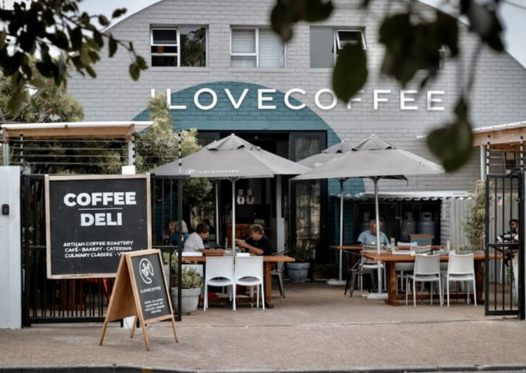
When you visit an I Love Coffee site, whether it’s the flagship café in Claremont, a corporate café inside Virgin Active’s head office, or one of the WeWork locations in Johannesburg, the experience is intentionally immersive. Ordering isn’t a transaction; it’s a conversation. There are visual menus, tip sheets, and interactive iPads that teach you how to sign your order. Strong eye contact, a pointed finger, a simple hand gesture - suddenly the divide between hearing and Deaf doesn’t feel quite so wide.
“People are always surprised by how many ways there are to communicate with a Deaf person,” Hopkins has noted. And that surprise is the point. By the time you’ve ordered your cappuccino in sign language, however shakily, you’ve crossed a bridge. That small, slightly awkward, deeply human moment is what I Love Coffee is really selling.
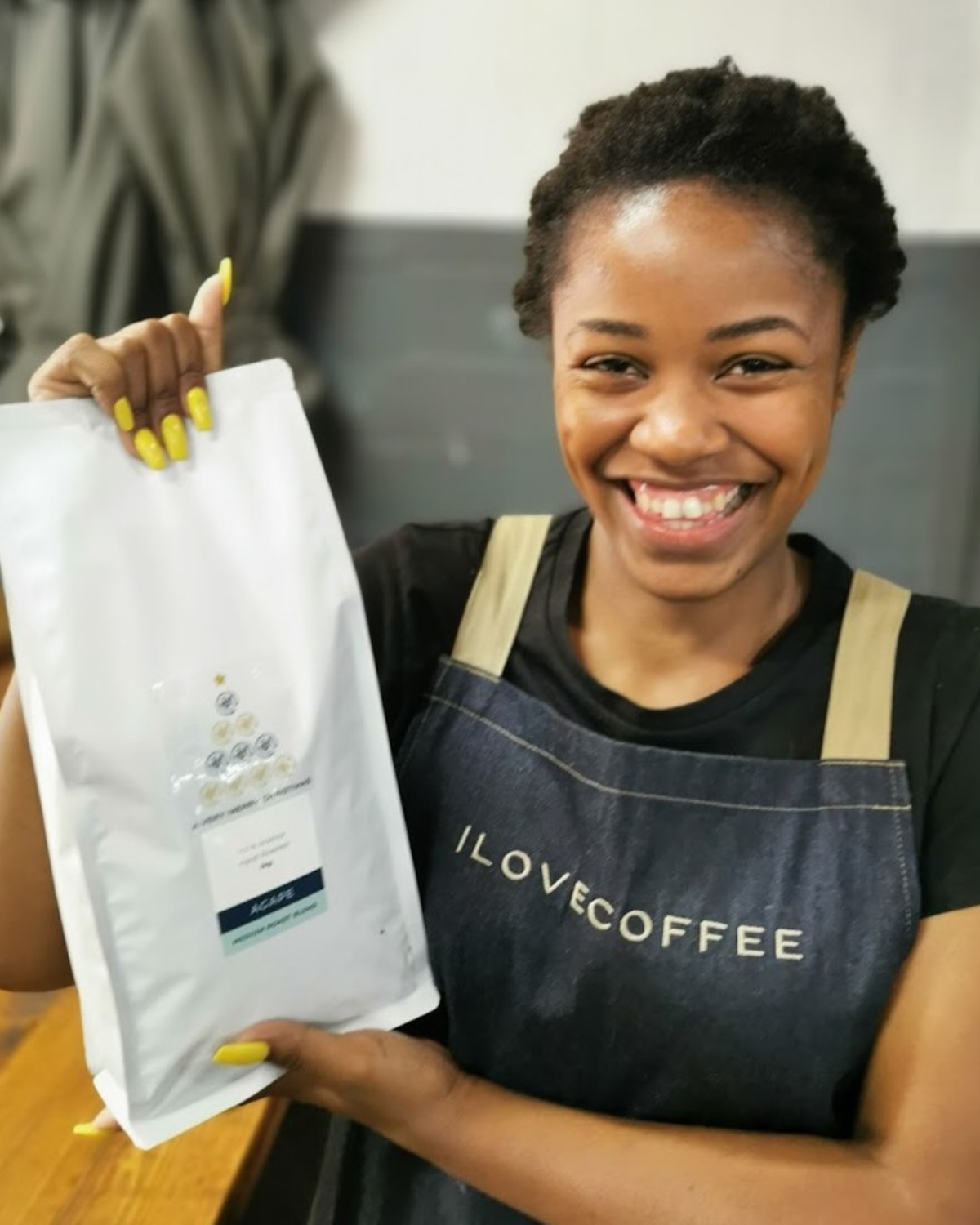
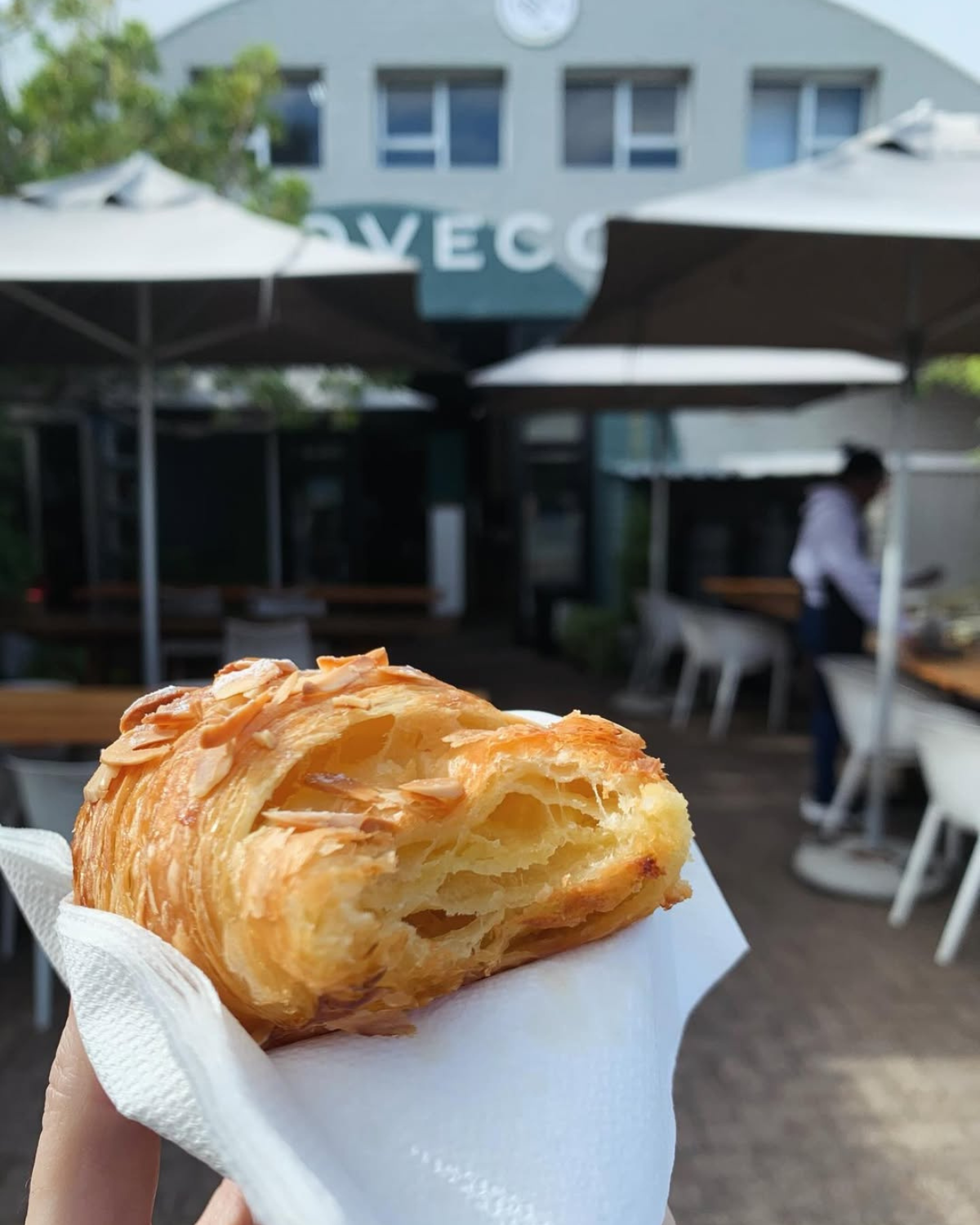
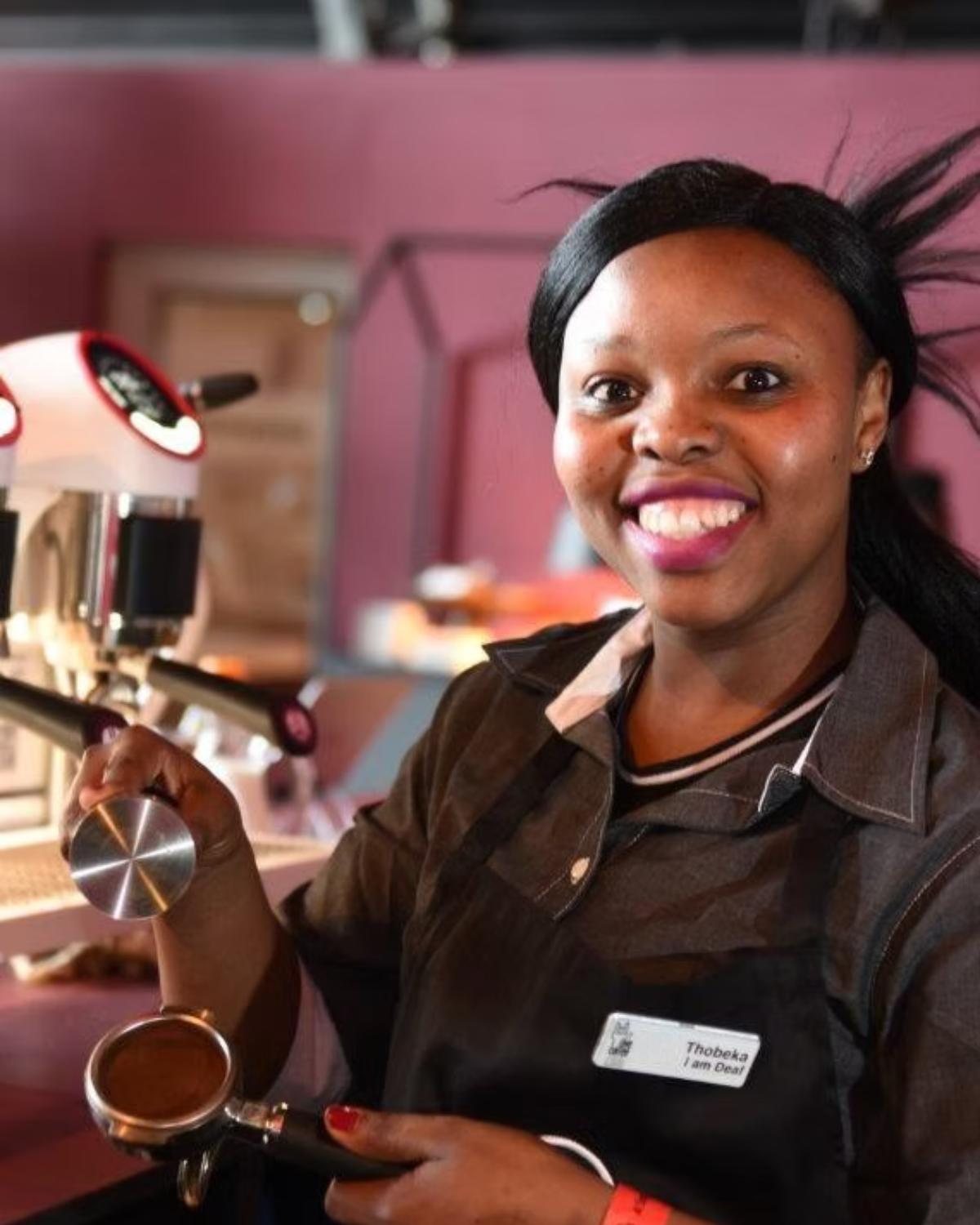
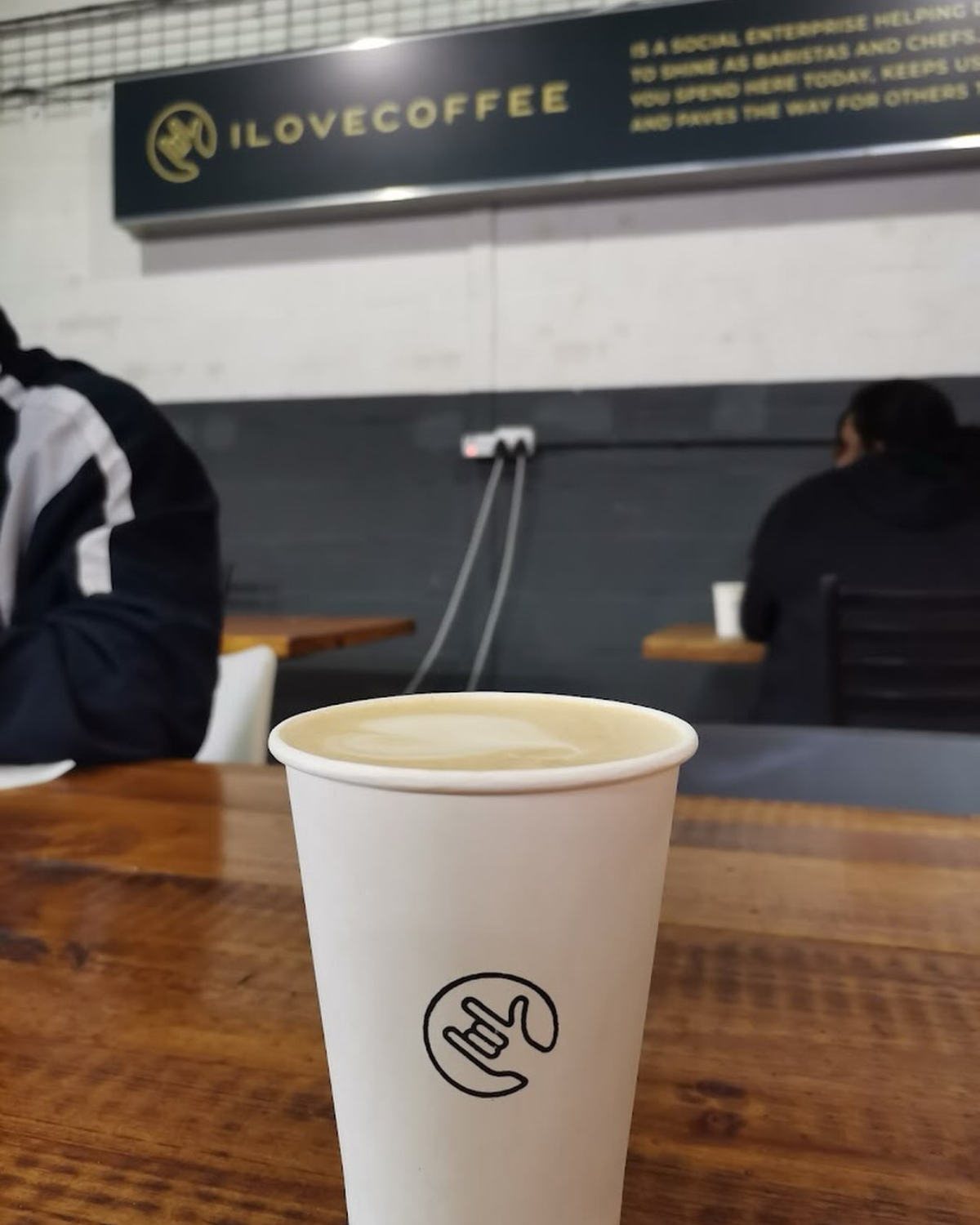
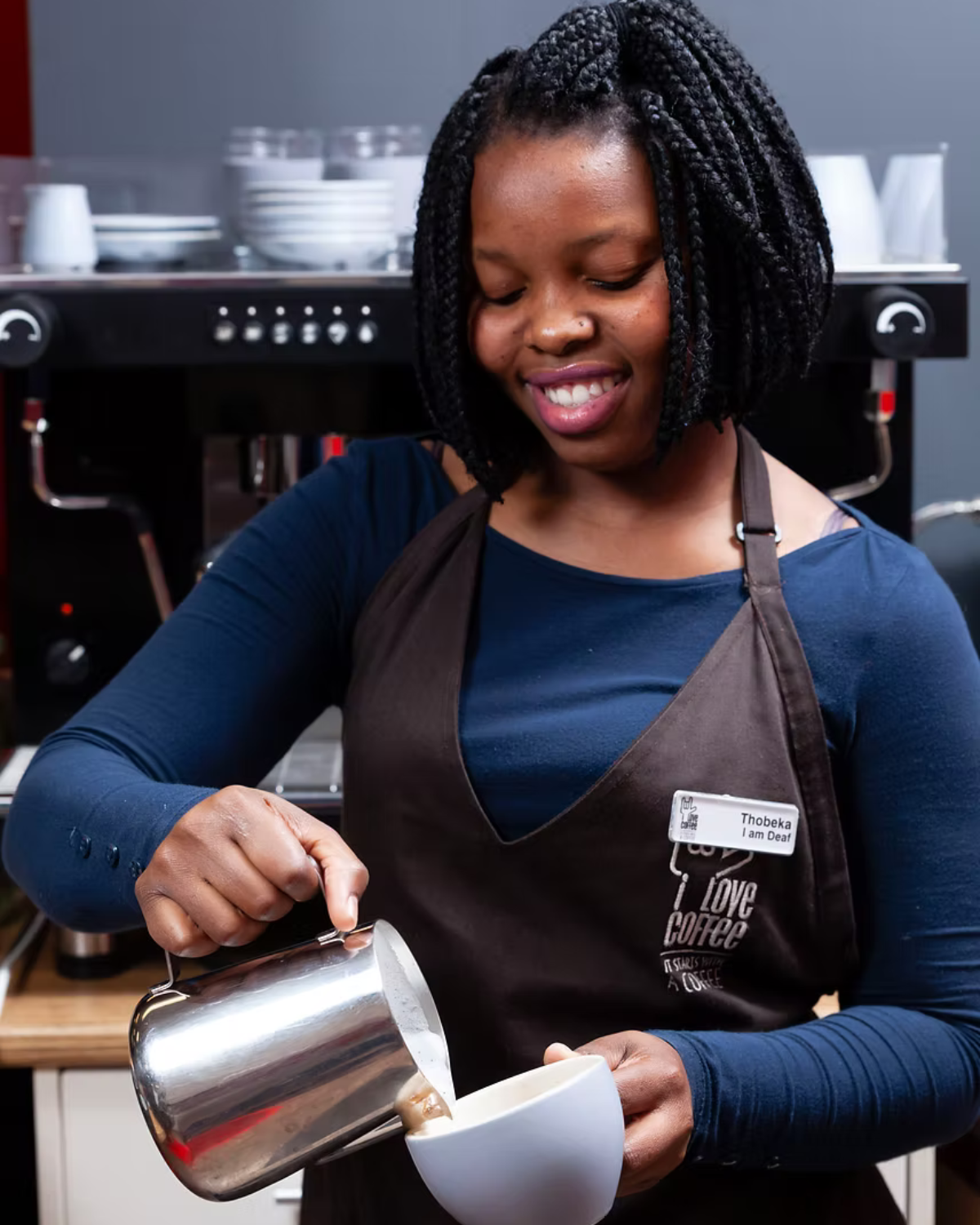
I Love Coffee doesn’t just employ Deaf staff - it builds careers. Barista training is the entry point, designed to grow confidence and teach customer interaction. From there, high-performing staff move into the kitchen, the roastery, or into management. The longer-term vision is explicitly ambitious: to train Deaf staff not just for I Love Coffee, but for any company willing to embrace inclusion. The organisation has been working towards SETA accreditation and the launch of a formal Training Academy offering hospitality qualifications taught by Deaf trainers, in sign language - for Deaf learners.
That last detail matters enormously. So much of the Deaf community’s unemployment stems not from lack of ability but from lack of accessible education and training. I Love Coffee is working to close that gap from both ends: giving Deaf people the skills the economy needs, and showing employers that hiring Deaf staff isn’t a risk - it’s an asset.
What started in the corner of a gym with a borrowed coffee machine has grown into a multi-city operation. I Love Coffee currently operates across 14 locations in Cape Town, Johannesburg, and London. Their partnership with WeWork, which began in Rosebank in 2019 and expanded to four London sites in 2023, has been a significant driver of scale, with Deaf-trained baristas embedded in co-working spaces in Holborn and Covent Garden.
Rooibos
Cappuccino
Hot Chocolate
The Branson Centre of Entrepreneurship South Africa has also backed the enterprise with business-development investment of R3 million over three years, recognising that I Love Coffee’s model isn’t charity - it’s a replicable, commercially viable business that happens to change lives. They were also selected for the Zero Project, an international initiative that helps disability-focused businesses scale their impact globally.
South Africa has roughly two million Deaf adults and children who lack adequate services, support, and economic opportunity. Sign Language is now an official language - a landmark development that the I Love Coffee team celebrated deeply - but recognition on paper doesn’t automatically translate to jobs, dignity, or economic participation. That takes businesses willing to do things differently.
I Love Coffee is proof that a premium product and a social mission are not mutually exclusive. The coffee really is exceptional - co-founder Mike Morritt-Smith was instrumental in setting up Truth Coffee, one of Cape Town’s most celebrated roasteries. The food is genuinely good. The cafés are beautiful. You’re not buying mediocre coffee to feel good about yourself. You’re buying excellent coffee that happens to be roasted, blended, packed, brewed, and served entirely by the Deaf community.
That’s a pretty extraordinary cup of coffee, if you think about it.

