#doDifferent with Revolutionary Retail "Waste"
We all know the quiet shame of a wardrobe clear-out - bags of clothes that no longer fit, electronics gathering dust, the nagging guilt of things that still work but somehow don't have a home anymore. Now imagine that the very same unwanted items that were destined for landfill are instead landing in the hands of an unemployed mother in a Cape Town township, becoming the seed capital of her very first business. That she's debt-free within two years. That her children go to school with full lunchboxes and she holds her head a little higher every single day. That's not a fantasy. That's Taking Care of Business.

Taking Care of Business (TCB) is a proudly South African nonprofit social enterprise - and one of the most quietly extraordinary organisations operating in this country today. They're not just redirecting waste. They're redirecting lives. Through enterprise development programmes rooted in the circular economy, TCB is turning South Africa's unemployment crisis into an opportunity - one small business at a time.
Every great South African story starts somewhere modest. TCB's began in 2010, when co-founders Tracey Chambers and Tracey Gilmore opened their doors in a double garage made available by the local municipality in Salt River, Cape Town. With a large stock donation from Woolworths and a group of unemployed mothers recruited through The Volunteer Centre, they started training women to buy and sell clothing. They called themselves The Clothing Bank.
From that garage - that act of stubborn, practical faith in people - something remarkable grew.
Fast-forward fifteen years, and TCB has evolved into a multi-programme organisation with four branches across South Africa and a national footprint through its Grow ECD division, with offices in Cape Town, Johannesburg, Durban, and Gqeberha. The Clothing Bank has been rebranded as Taking Care of Business - a name that holds both grit and warmth. And those original two Traceys? Still driving the vision, still in it for the long haul.
What has never changed is the foundational belief: that with the right support structure and opportunity, anyone can become self-employed. That poverty is not a character flaw. That people just need a door to open.
- Taking Care of Business
To understand TCB is to understand the circular economy - not as a buzzword, but as a living, breathing system that works for people and the planet simultaneously.
Here's how it works: South Africa's major retailers - brands like Woolworths, TFG, Truworths, Mr Price, Shoprite Checkers, Pick n Pay, Clicks, Pep, Cotton On, and more - accumulate excess stock, dead inventory, returned goods, and damaged items every single season. In a traditional model, this merchandise is destroyed or dumped. TCB intercepts it.
They collect the excess stock, sort and debrand it, repair and repurpose what needs attention, and then equip local unemployed individuals to buy and sell it in secondary market communities. The retailers get a responsible, cost-effective solution to their waste problem - and earn their BBBEE Enterprise Development points in the process. TCB gets the raw material to run life-changing programmes. Everyone wins. And the earth breathes a little easier.
To date, over R559 million in profits has been generated by 7,800 informal entrepreneurs powered by this model. Millions of items have been diverted from landfill. It's not charity. It's architecture - a system designed so that doing good makes sense for everyone.
TCB's programmes are as diverse as the people they serve. Here's a look at what they do:
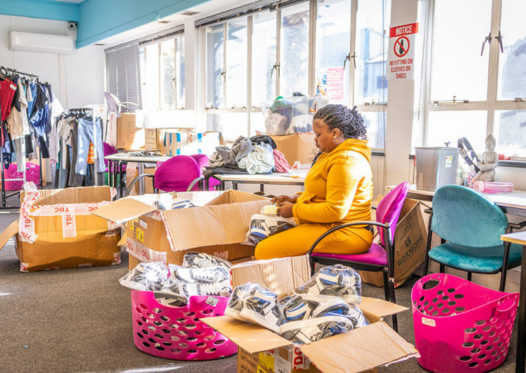
Resell is TCB's flagship programme, and it is built around unemployed mothers. Participants receive donated clothing and fashion items from retail partners, training in buying and selling, business and financial skills, life coaching, and mentorship. The result? Women who go from earning nothing to running their own businesses, paying off debt, and saving - often for the first time in their lives.
Nombulelo Magunya, one such participant, says it plainly:
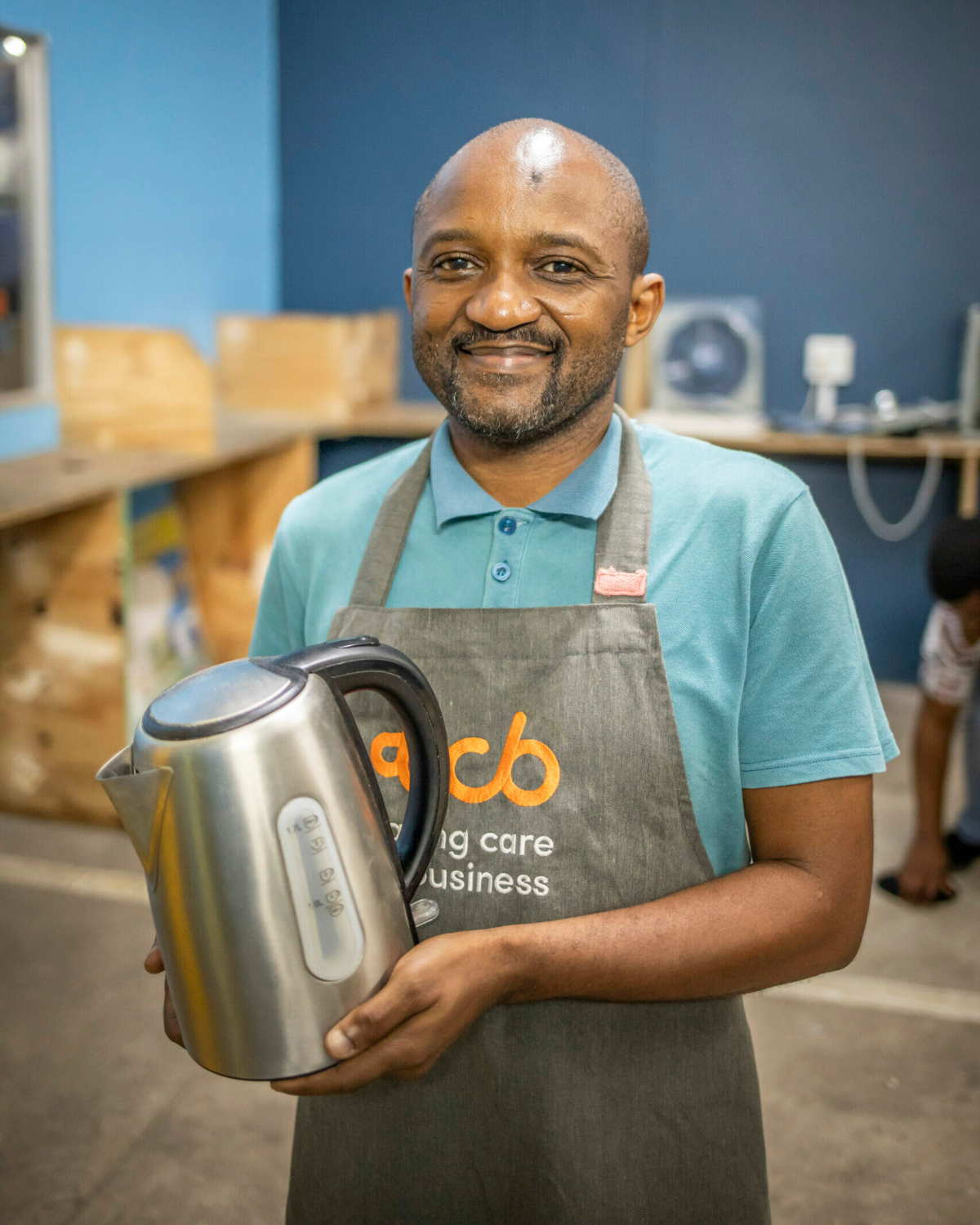
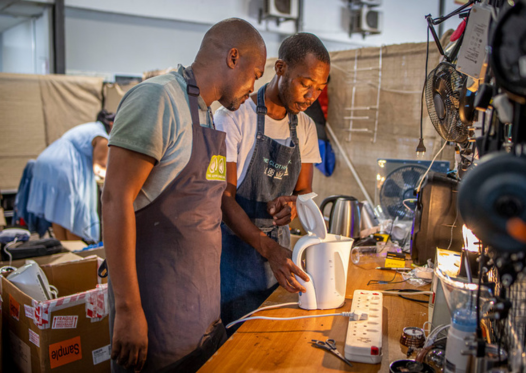
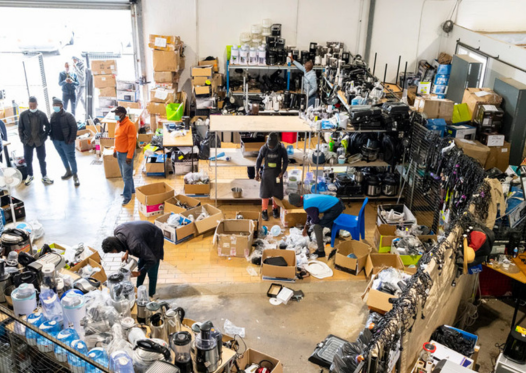
Repair targets unemployed men - predominantly fathers - teaching them to repair and trade small and large appliances, reducing e-waste and extending the lifecycle of products. Siyabulela Velele, from uMlazi, struggled to find work before joining the programme. Today, he runs an appliance repair business that supports his family and, in his own words, has restored his dignity.
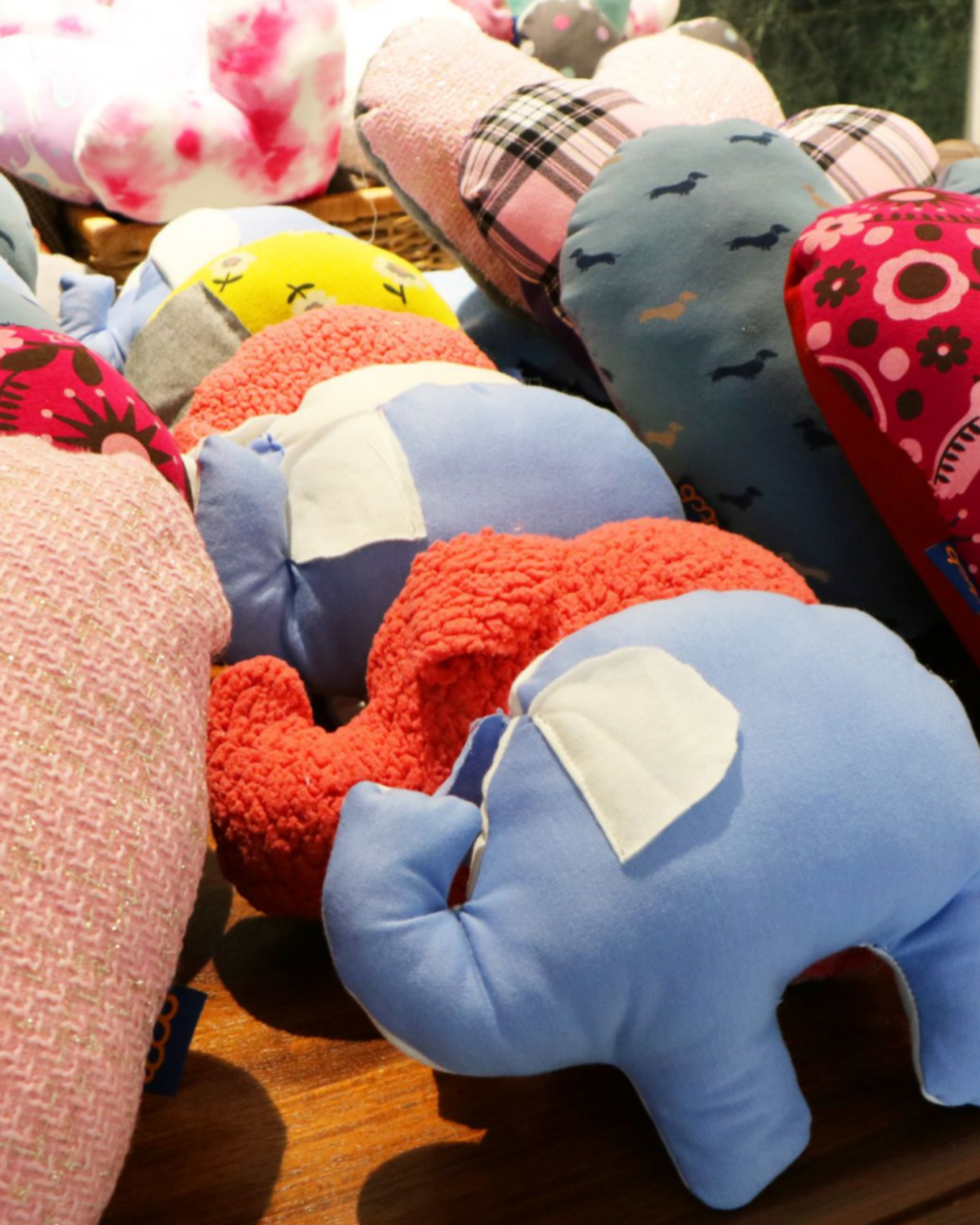
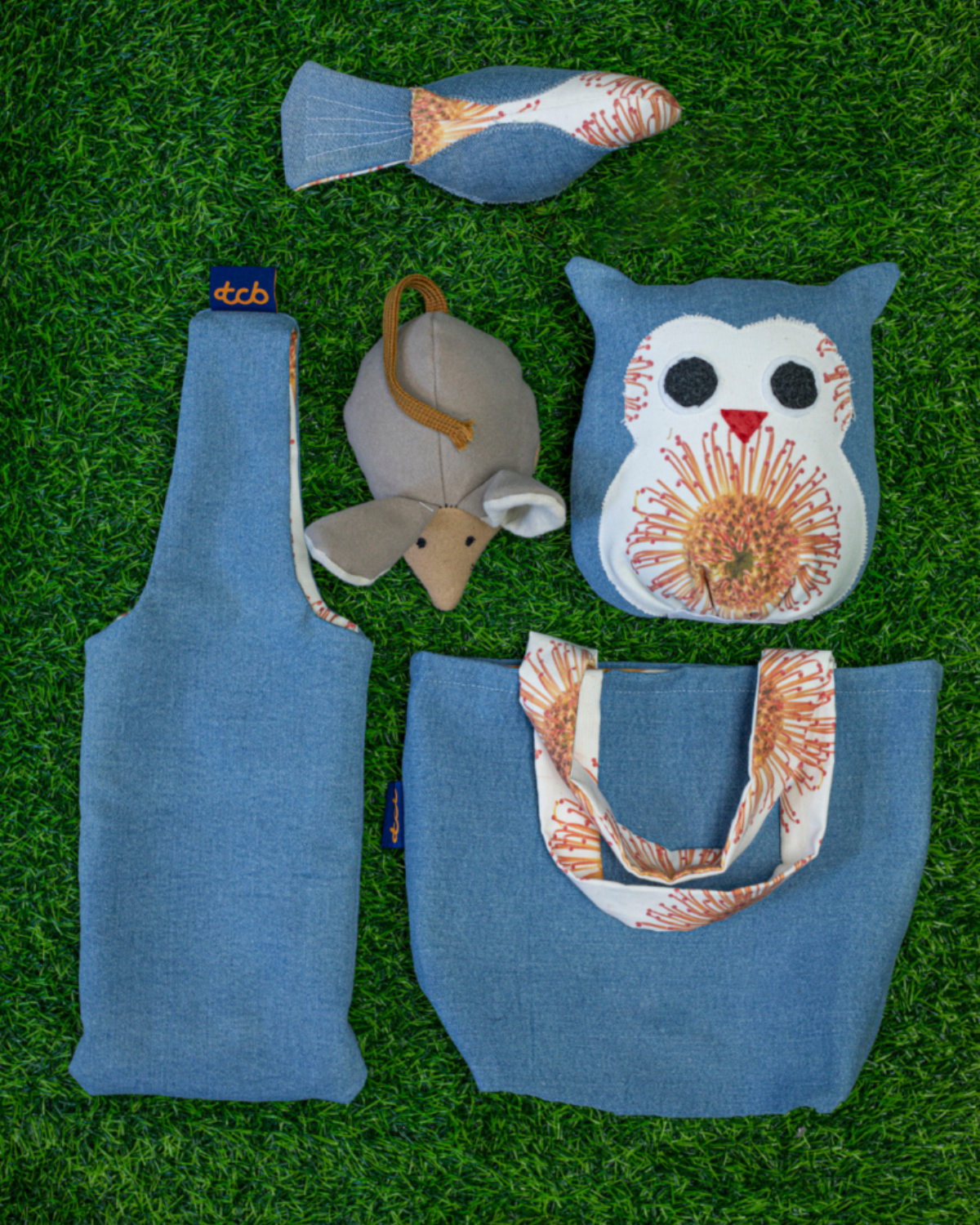
Remake equips unemployed seamstresses to build micro-manufacturing businesses, transforming fashion waste and excess fabric into saleable products. It's creativity meeting commerce meeting sustainability - and it's turning offcuts and samples into income.
Grow ECD addresses one of South Africa's most urgent challenges: the early childhood development gap. This division equips women-led preschools in low-income communities with training, mentorship, business support, and access to quality education resources. Preschool owners receive step-by-step guidance on running financially sustainable operations, so that children receive quality early learning and women entrepreneurs can earn a dignified income doing it.
Reskill and Redistribute round out the offering - the former making TCB's transformative training available to other organisations and employees, the latter donating merchandise to nonprofits that support the most vulnerable.
TCB's model works from the inside out. The secret sauce - and they'll tell you this themselves - is what they call their A2B Human Optimisation methodology. It's not just about business skills. It's about helping people understand themselves: their mindsets, their habits, their capacity for change. Life coaching, counselling, personal growth workshops - these aren't add-ons. They're the core.
Because TCB knows something the spreadsheets don't always capture: that a person who doesn't believe they deserve success won't sustain it. And a person who has rebuilt their sense of self? That's a business owner in the making.
The results bear this out. TCB measures its impact using the internationally recognised Greenlight Movement Tool - a multi-dimensional poverty indicator used by over 100 organisations globally. Their findings are striking: the biggest change in poverty indicators happens in the first year of a TCB programme - and it is sustained over time.
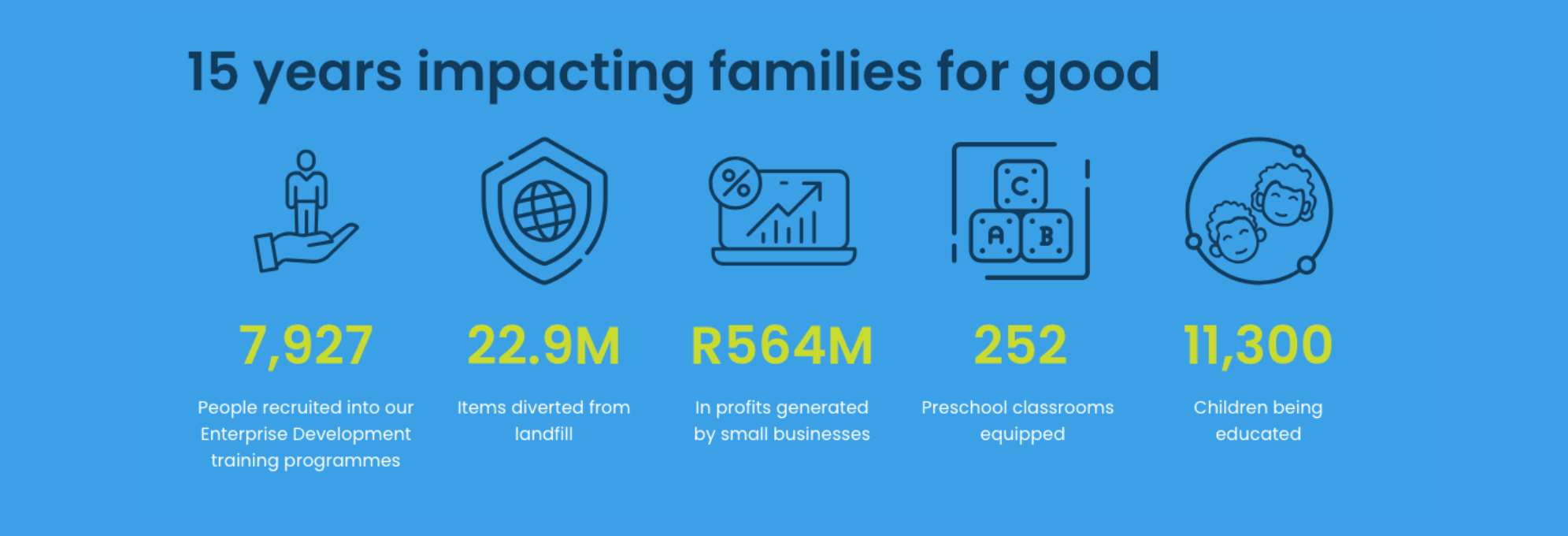
In 2025, TCB celebrated 15 years of impact - and the numbers tell a story worth celebrating. Thousands of people recruited into enterprise development training. Millions of items diverted from landfill. Over half a billion rand in profits generated by small businesses. Hundreds of preschool classrooms equipped. Thousands of children being educated.
That same year, TCB was awarded the iZinga Verification Token - achieving 5-star status for legal compliance, financial transparency, and proven impact. Their financial education programme, Me and My Money, was officially recognised for meeting South Africa's national Consumer Financial Education Standards. And TCB UK launched as a registered charity, creating a bridge for UK-based donors and expatriate South Africans to invest in these proven programmes.
Co-founder Tracey Chambers, also an Ashoka Fellow and recipient of a Cape Town Civic Honours Award alongside co-founder Tracey Gilmore, puts it simply:
They aren't wrong. TCB's Resell and Repair programmes have been listed in the international Acumen "100 Corporate Ready Social Enterprises" report. They support seven of the UN's Global Sustainable Development Goals. They've won the Mail & Guardian Greening the Future Award, the Twyg Social Impact Award, and the World of Difference Award from The International Alliance for Women.
Portia Mtelekiso, a TCB Resell participant, says:
That is the measure. Not just profits generated, but couches in living rooms. Not just items diverted from landfill, but children who go to sleep with the lights on.
If you're a business that generates excess stock, redundant merchandise, or fashion waste, TCB is ready to be your partner. They offer a national, cost-effective solution - collecting, sorting, debranding, and redistributing - that qualifies for BBBEE Enterprise Development and Socio-Economic Development points. Doing the right thing doesn't have to cost more. With TCB, it can cost less.
And if you ever wonder whether South Africa's challenges are simply too big to solve - remember a double garage in Salt River, two determined women, a bag of donated clothing, and a group of mothers who just needed someone to open a door. That door opened into R559 million in profits, millions of lives changed, and a model that the world is now watching.
Together, let's choose differently. Let's support businesses and organisations that are building something real - not just growing a bottom line, but growing people. Because a South Africa where waste becomes opportunity and unemployment becomes entrepreneurship is absolutely the country we want to live in.